The First Thing That I Don’t Remember…
“Hey, Smithy, how are you feeling today?” said Charlie with intent. I immediately recognized Charlie – he is a close friend and a wicked lead guitarist in our garage rock band.
“Charlie!” I answered like he was coming around to jam out some songs.
“Smithy, yeah, how are you going?” Charlie responded.
I looked around and asked, “Where am I?”
“You’re in the hospital, mate.”
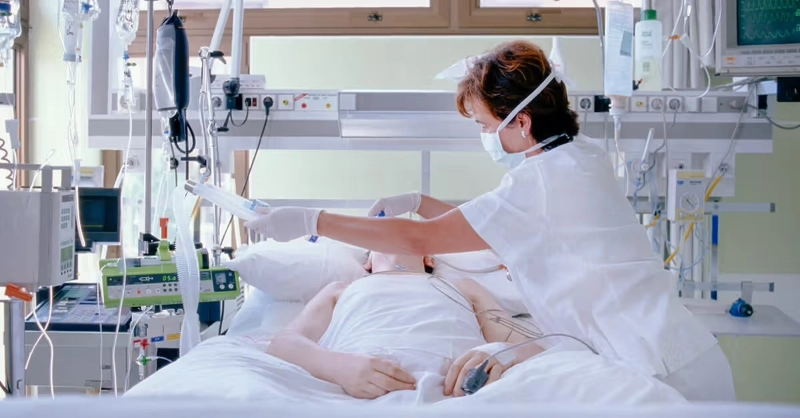
I looked around – or so I am told – to see the typical hospital setting. My expression must have shown my confusion as I glanced at the boxes beeping and the tubes up my nose.
“How did I get here?” I asked.
“You had a paragliding accident,” said Charlie.
“Oh?” I replied. That seemed highly unlikely to me, but I went with it.
Then I said, “Charlie! Hey, mate, how are you?”
Charlie replied, “Smithy, how are you feeling?”
“Charlie, where am I?”
“You’re in the hospital, mate.” With that, I would look around the room again to confirm it.
“How did I get here?”
“You had a paragliding accident,” he reaffirmed, met with the same look of disbelief from me.
This loop went on for ages, only broken by Charlie changing the subject. I had a memory span of about 90 seconds.
Welcome to the Land of PTA – Post-Traumatic Amnesia
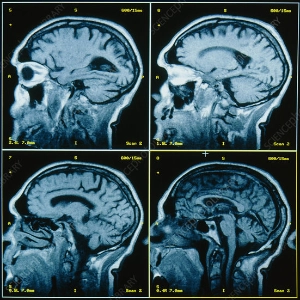 PTA is a condition that follows a traumatic blow to the head. After my ten days of an induced coma, my brain was a little shaken. I had trouble comprehending where I was. Yes, apparently I had crashed my paraglider while taking someone for a joy flight, which I still have no memory of. It is a very confusing state in which your “self” and your consciousness gradually reform.
The details of the accident are unclear to me because I have no memory of much at all. I will come back to that later, but first, I want to describe my very first memories and how they might relate to brain function and consciousness. This is something I have been studying for years after my accident.
The first thing I recall is that I didn’t know who I was, where I was, or what I was – I just felt that I existed. I felt an all-encompassing loneliness, a loneliness and emptiness so profound that it defies description. Then, after some time, I still didn’t know who, what, or where I was, but I felt beauty, warmth, and love, and I knew everything was going to be alright. It’s a feeling I now try to reach through meditation.
The First Memory – Emotion
From my memory, my first window into consciousness was purely emotional; the pencil light of consciousness shone deep into the core of my brain.
Life in PTA land was about to begin. I could recognise people by the emotions they provoked in me. At this stage, I could not understand words. All I wanted to do was get up and go to the toilet. However, I was catheterised, but the fact that my urine was being evacuated from my body did not change my desire to pee standing up. Unfortunately, without my knowledge, I had fractured my spine and was restrained with Velcro straps to my bed. The restraints were there for my own good. I couldn’t understand why I couldn’t get up, take the tube out of my nose, and piss standing up. Apparently, I would use any ploy to get this gastric nasal feeding tube out of my nose.
My friends would come in and hug me, and I would try to hug them back, whimpering at my restraint. They would then undo the Velcro strap so I could hug them back, and I would promptly pull that bloody tube out of my nose. One thing I distinctly remember is seeing a sign saying “toilet” in bright red. All I wanted to do was go and piss at that toilet, standing up like a real bloke, like I thought I was supposed to. I was in a very amnesic state, driven by a primal urge to pee standing up and release myself from restraint.
Memory Land
My short-term memory had now broken that horrendous 90-second loop. I could now talk to people and hold conversations. My memory had come back from holiday, and I had absorbed the fact that I had broken my spine and that my left leg had nerve damage, making walking difficult. My short-term memory was now communicating with my long-term memories.
I knew I was an ex-professional paraglider pilot and a practicing osteopath with a good anatomical knowledge of the human body.
I had left the High Dependency Unit (HDU) after sleeping my way through the Intensive Care Unit (ICU) in a coma, and now I was in the very capable hands of Ward 8, the neuro ward. They, I found, were very accustomed to rattled brains and handled me well. However, I did pull some stunts in my confused condition.
I hadn’t fully grasped how much my brain had been rattled. One time, Charlie came to visit, and we talked about music. He mentioned a gig that our group was supposed to be performing that night. As he was leaving, I said to Charlie, “Tune my bass, I’ll meet you there,” and he replied, “Yeah, no worries, I’ll have it ready for you, Smithy.” I genuinely believed I should be there, so when it got dark, I tried to go…
That night, the doctor had to write a restraining order to keep me sectioned in the hospital. I spent many hours trying to escape and convincing nurses that, yes, I had a gig to play that night, and I was simply going to go! Thank God for very, very patient nurses. I even invented laws that I quoted to the nurses, arguing that they were, in fact, kidnapping me. Anyway, I never made it to the gig. A cross-looking doctor can kill your ambition.
Social Awareness
As my consciousness and memory reformed, I became very concerned about the fracture in my spine. I knew I had a severe crush fracture of L5, which had rendered me paralysed in the left leg. The orthopaedic surgeon had relieved the pressure on my spinal cord, and function was gradually returning to my leg.
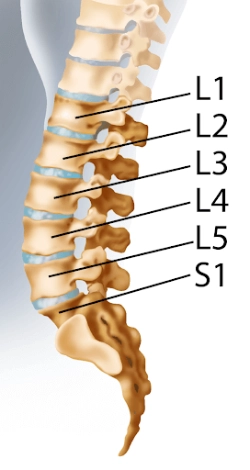 I recalled from my neuroanatomy studies when I trained to be an osteopath that the cauda equina emerges from the L5 vertebra. In my mind, I traced these nerves, knowing that the cauda equina plays a role in sexual function. I began to worry – I feared penile dysfunction. The thought that my future love life could be over genuinely troubled me. For six days, I was not experiencing “morning glory,” a colloquial term for the early morning erection that many men experience before they are fully awake. Each day without it deepened my concern, and of course, anxiety is not helpful in that department.
By the seventh day, however, the sun rose, and so did my spirits – along with something else. I was overjoyed to experience my first morning glory since the injury. It was a moment of pure elation, a sign that I could still perform this vital male function.
In my excitement, I felt the urge to share my happiness. Still somewhat confused from the brain trauma, I was handed a phone by a nurse who said, “It’s your friend Jamie from England.” Jamie was a close friend with whom I had worked about 15 years earlier, and despite living on opposite sides of the planet, we had remained in touch. As I heard Jamie’s voice, he sounded understandably worried about my condition. His first words were, “Hi, it’s Jamie. Do you remember me?”
Overflowing with joy, I blurted out, “Jamie, Jamie, I just had an erection!” My understanding of social etiquette hadn’t fully reestablished itself – not that I was ever very politically correct – but this was a new low. The nurse gave me a puzzled look, followed by an awkward silence on the phone. Eventually, the conversation shifted to more trivial chitchat, accompanied by a bit of explaining.
An analogy to the brain is a tree. The roots and trunk correspond to the brainstem, anchoring the body to the brain. The ground represents the body, while the trunk – like the brainstem – connects to the heart of the tree, the limbic system. The sun strikes the trunk, awakening the limbic system, giving rise to emotions. The sunlight then radiates out to the lower branches, which can be likened to the hippocampus, responsible for short-term memory and memory in general.