
When you can’t talk about what bothers you, it can lead you to do things you wouldn’t normally do. But doing the unusual can open your mind.
I was 13 years old, questioning authority. I didn’t like where I was or know how to change it – or even what I would change it to. After all, I was only 13. What could I really do?
From the age of 10 to 16, I was sent to public school. I finally managed to get asked to leave – not quite expelled, but close. It took quite a bit of effort. I really didn’t like these schools, and the six years I spent there were hard for me.
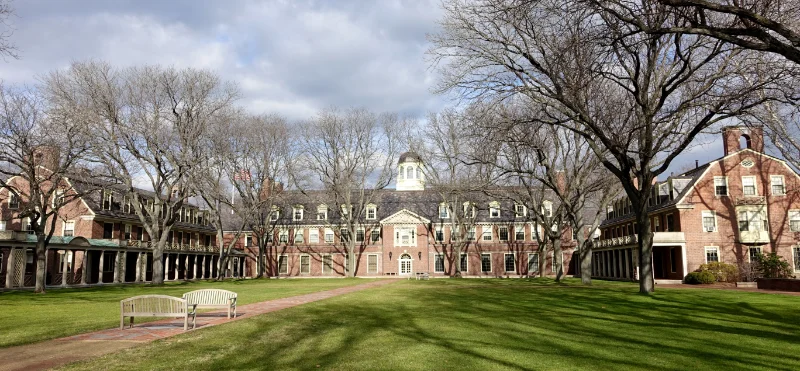
Now, for those outside the UK: public schools aren’t public at all. That name is misleading. When they were founded in the 1700s and 1800s, the idea was that they’d be open to anyone, regardless of location, denomination, family trade, or military affiliation – and not for profit. A noble idea. But today, they’re institutions associated with grooming the ruling class.
Entry now depends on money, and the student body is filled with upper-class twits and rich foreign students. By the time I left, I’d developed a deep dislike for the English class system and everything it stood for. Britannia once ruled the waves and colonised a fifth of the world – the sun never set on the British Empire. And with that history, the English upper class believed in their own entitlement. The public school system is an incubator for this mindset, nurturing the future elite. Their behaviour reflected it.
 My father believed in good education. He went to Wellington Public School in the 1930s – it was a different time. He worked hard, really hard, to afford the fees for me and my brother. But public school didn’t work for me. I came away with just three O-level passes out of eight – and a burning dislike for the English class system.
Take Boris Johnson: a bumbling upper-class buffoon. He reminded me of a classmate, Grevel Dare. I once asked Grevel about a science homework question. I liked science. He responded with disdain. I told him he should at least try – otherwise, he’d fail. He said he didn’t care. He didn’t need qualifications. His future was secure – he’d inherit his dad’s hotel business. Years later, I googled him. And there he was: rotund, Boris-like, standing proudly outside his hotel. He looked very pleased with himself. He got what he wanted. Thanks, Daddy.
It wasn’t that I missed home – I didn’t like home much either – but I did like the freedom. My parents were preoccupied with earning money, partly to pay school fees. My father was on his third wife. My brother and I were left to integrate with our stepmother’s children. They were good kids. We later became true siblings and still share that closeness today. But my relationship with my stepmother was hard. We seemed to compete for my father’s affection. She wasn’t wicked, but she messed with my head.
At 13, I was sent from prep school to public school. My father wanted me to attend his old school, Wellington. And so I was packed off. I remember him saying as he dropped me off – 200 miles from home – that we could always look at the same moon. I still don’t know what he meant by that or how it was supposed to comfort me. Then he left. And I was quite alone.
I quickly developed a dislike for Wellington. I was a small fish in a very big pond. Where I had once bossed others around, I was now being bossed. No longer king of the jungle – I felt like a goldfish in the ocean. Dislike turned into hate. So, I started plotting. Plotting my escape.
I’d recently seen The Great Escape, the old war movie. I knew I needed a plan. It was 200 miles to hitchhike home. I needed food. I learned how to bake bread using one of those pre-prepared sachets – just add water and cook. Magic! I packed that with some cheese. Voilà: provisions. Why I didn’t just use ordinary bread, I don’t know – it was all part of the plan.
The best time? Sunday morning. Everyone would be having a lie-in, no classes, no expectations. So Sunday it was. I packed a bag with non-uniform clothes and my food stash, and buried it near the road I’d use to hitchhike. Saturday night, I was ready.
In the dorm with 20 boys, I lay awake. At sunrise, I crept out – out of bed, down the corridor, out the window. In my pyjamas and dressing gown, I ran to my hidden bag, changed into jeans and a T-shirt, and realised: no jumper, no coat, and worst of all, no shoes. Just slippers.
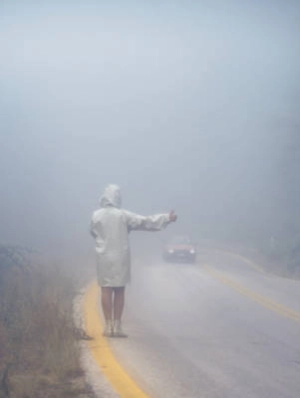 I walked to the roadside and stuck out my thumb. I’d never hitchhiked before. I had no idea how people viewed a child trying to travel 200 miles alone. But sweet-faced, I got a lift straight away. I had a rough sense of the towns I needed. I made great time – never waited more than a few minutes. Everyone seemed willing to pick up a kid.
Then it started raining. I was cold and wet. I had nothing warm except the dressing gown. So I put it back on. I must’ve looked a sight: a kid in a dressing gown and slippers, hitching in the rain. It worked. People picked me up right away. That’s when I started inventing stories. I told people I’d stayed in a youth hostel and someone had stolen my shoes and jacket. It immediately put their minds at ease – they didn’t take me to the police but dropped me off at my next stop.
One van that picked me up and took me to Portsmouth was an eye-opener. A few people were hanging out inside, drinking, laughing, free. One of them offered me a cigarette. I declined – it was way out of my league – but wow, what a glimpse of another world.
Eventually, I made it to the southern edge of Portsmouth. I walked along the beach toward a little passenger ferry that would take me to Hayling Island – home. I met a boy about my age at the ferry. I told him my story during the four-minute crossing. Once on dry land, he gave me a lift – on the crossbar of his bike. That day I had rides from an E-Type Jaguar to a pushbike.
When I got home, my father was standing at the door, astonished. For once, he didn’t growl – he was usually very authoritarian. Instead, he hugged me, exhaling in relief. He’d been following a news story about a car crash near my grandparents’. One of the fatalities was a boy my age. No names had been released. So in his mind, it could’ve been me.
Later, I found out I knew the family of the boy who died. I’d lived with my grandparents for a year and knew most of the people in that tiny village – Heytesbury. That family included.
Corporal Punishment and Public School Life
At the time, corporal punishment was completely normal in public schools. This usually involved strokes of the cane across your backside. You had to bend over, and the master would deliver a set number of strokes depending on the severity of your offence.
It hurt like hell. Honestly. And the anticipation between each stroke was almost as painful as the strike itself.
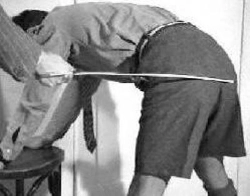 A typical caning began with a stern talking-to, where your particular misdemeanour was dissected. Then came the ritual itself. The number of strokes varied depending on your “crime.” For most minor infractions, you’d get three or four. For more serious offences, up to six. The worst I ever got at once was five.
I remember one especially brutal caning, delivered by an old pro, Mr. Heiden. He had been my House Master before, so we had a bit of history. The cane he used was about five feet long and made of serious bamboo – much thicker and more terrifying than the ones I was used to.
The anticipation was unbearable.
I bent over obediently. Each strike delivered a searing pain deep into my backside, followed by a dreadful pause – only a few seconds, but it felt like eternity – before the next whack came crashing down. That day, I think I could have invented breakdancing. I jumped from one foot to the other, trying to suppress the pain. It overshadowed every caning I’d ever had before – and I had plenty. In fact, I held the unofficial record for the number of strokes in my year. Good to be good at something, I suppose.
Most of my canings came from run-ins with the Prefects – boys one to four years older than you, granted power as monitors. It turned some of them into little Hitlers. They say power corrupts, and absolute power corrupts absolutely. That was certainly true here.
I got so used to being caned that it almost became routine. I remember one day, standing before my new House Master, Roger Clark. He was also my German teacher – a kind, supportive man. But now, in his role as House Master, he had to play disciplinarian.
He told me I’d have to be caned, but I could see he was uncomfortable. I doubt he’d ever done it before. He looked around for the cane but couldn’t find it. Then he said I’d have to do lines instead.
“Lines” meant writing the same sentence over and over for an hour – usually while the rest of the boys watched their hour of TV. The sentence was supposed to make you reflect on your actions. In truth, it meant nothing. Worse, it had to be written in copperplate calligraphy – an ornate, finicky style.
Trying to help him out (or maybe to avoid the lines), I said, “Look, it’s over there behind the curtain.” He reluctantly gave me three strokes – light ones. I had to fake the pain! I left his office and went off to enjoy my TV time. No pain, big gain.
Later, I earned Roger Clark’s respect. When I was in the Lower Fifth – about 14 or 15 – he became House Master of Adair House. We were still in dorms then, each bed separated by movable wooden partitions. Your little area was called your “cubicle,” and it had to be spotless. Prefects did regular inspections – clowns, most of them.
 Inside your cubicle were your desk and bed. It was my own small kingdom – and where I decided to try my hand at winemaking. I’d seen my dad brew beer, so I understood the basics. I found a large plastic bag and put it in a suitcase under my bed. I can’t recall where I found the little valve to let CO₂ out while keeping air from getting in, but I cobbled something together. I filled the bag with berries and water, sealed it with elastic bands, and waited.
It worked. I actually brewed wine. One day I drank a bit before going to History class. History was far more entertaining while tipsy! I felt a bit paranoid, though, as nobody else knew. It felt like a private triumph.
Well – almost nobody. Mr. Clark sniffed it out. I’d been oblivious to the pungent smell of fermentation. He caught me. But instead of anger, he just gave me a wry look, like he couldn’t help but admire the effort. He didn’t punish me. Just confiscated the wine. I think he respected the ingenuity.
That episode expanded my sense of what was possible. The risk and the action changed something in me. Eventually, I was sent to another public school. I hated that one too. After three years, they finally told me to leave.
A Turning Point: Seaford College and a Dream Takes Flight
Despite my contempt for the English class system, I met a few remarkable people during that time. One was my English teacher at my second (and final) public school: Seaford College.
His name was John Ellerton. He was an ex-RAF pilot, I believe. He made learning fun, and he’s the man who sparked my dream to fly.
He taught English with stories. For example, he once told us about how bombers flying over Germany had to communicate in difficult conditions. The bomb aimer would look down at the target, then direct the pilot by saying “R-i-g-h-t” very slowly or “Left!” very quickly. The pilot couldn’t always hear, but he’d know what direction to go based on the length of the word.
Ellerton also ran the parascending club. Every Sunday, weather permitting, a group of us would pile into a Land Rover and head to a disused airfield. It was the only real sense of accomplishment I ever felt at Seaford.
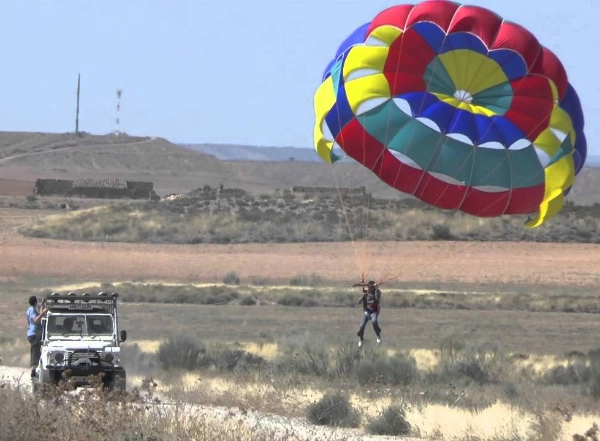 Parascending (spelled with an “a” – para for parachute, and ascending for the going-up bit) involved being towed into the sky behind a Land Rover, reaching heights of 200 to 1,000 feet, depending on wind and rope length. Then you’d release and steer your way down. We even had competitions to see how close we could land to a target.
Little did I know then that it would evolve into a 15-year career. By the time I went professional, parascending had transformed into paragliding – no longer just a way to slow your fall, but real flying. You could soar to the clouds and cross vast distances.
Flying, Finally
At school, we also had cadet programs – Army and RAF. Most boys joined the Army cadets and played at war. A few of us joined the RAF cadets – the boys in blue. We were seen as soft by the macho green-clad crowd. But we got to fly. I even went solo in a wooden-and-fabric glider at 16. The cockpit was open – your hair blew in the wind. I was just a kid, in command of an aircraft.
So, while I hated public school, without it I might never have found flight.
Running away from one school landed me in another that, secretly, gave me a gift.
No pain, no gain.
The pain of public school gave me the gift of paragliding.